Marka İtibar Analizi Nasıl Yapılır?
Sosyal medya verisinden marka itibarını anlamak için hangi metriklere bakılır, veriler nasıl yorumlanır ve sonuçlar marka iletişimine nasıl dönüşür?
- Sosyal Medya
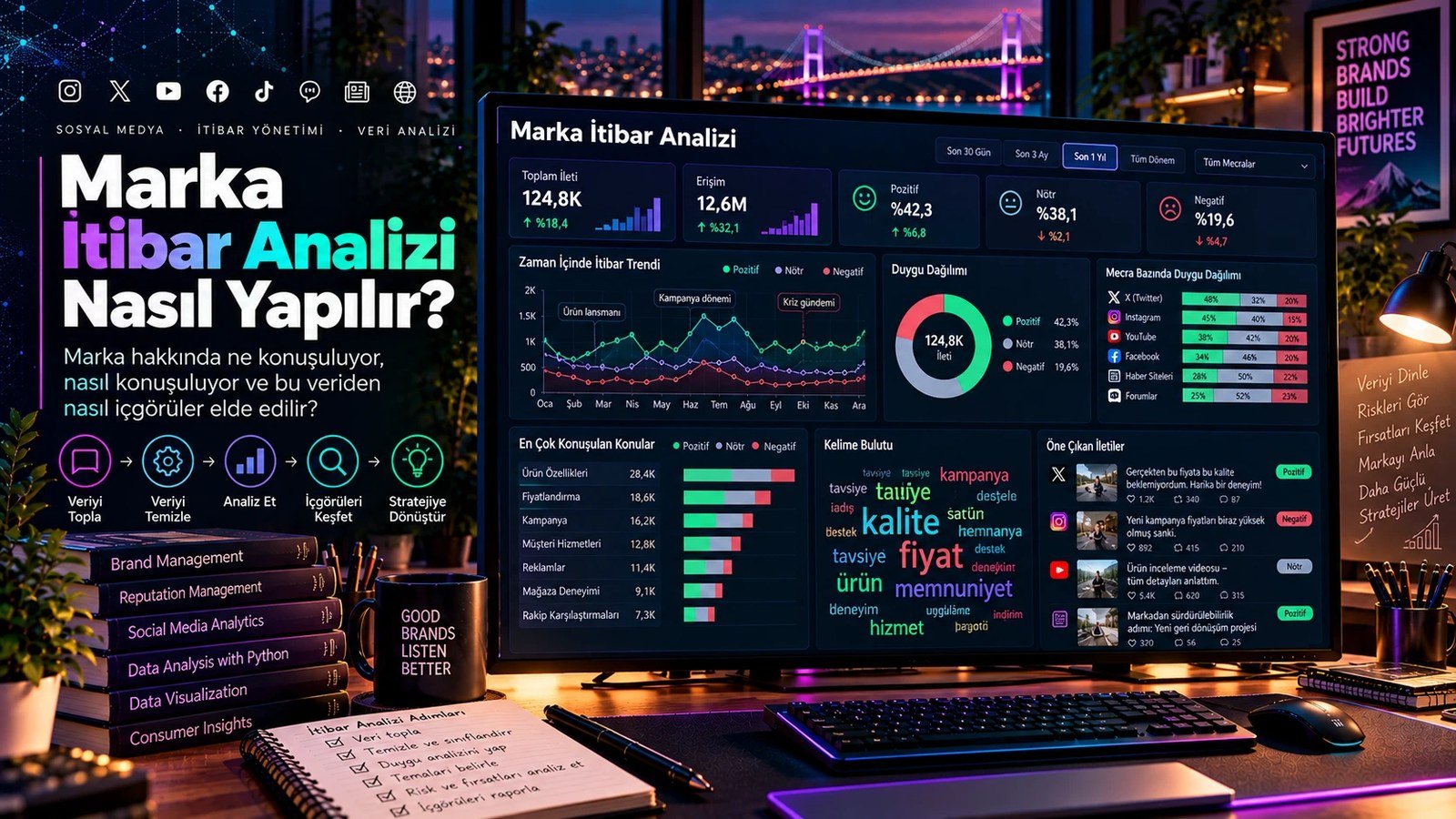
Marka itibarı, yalnızca insanların bir marka hakkında olumlu veya olumsuz düşünmesiyle sınırlı değil. Sosyal medyada ortaya çıkan konuşmalar; müşteri deneyimi, ürün algısı, fiyat, hizmet kalitesi, kampanyalar ve gündem gibi birçok farklı faktörün birleşiminden oluşuyor.
Bu nedenle marka itibar analizi yaparken tek bir metriğe bakmak yeterli değil. Mention sayısı konuşmanın hacmini, sentiment analizi duygusal yönünü, etkileşim yayılımı, konu analizi ise insanların neden konuştuğunu gösterir. Bu verileri kanal ve zaman boyutlarıyla birleştirdiğimizde markanın dijital itibarına çok daha bütünsel bir bakış elde ederiz.
“İtibarı ölçmek, sadece kaç kişinin konuştuğunu bilmek değil; ne konuşulduğunu, neden konuşulduğunu ve bu konuşmanın nasıl yayıldığını anlamaktır.”
Marka İtibar Analizi Nedir?
Marka itibar analizi; sosyal medya, haber siteleri, forumlar, bloglar ve diğer dijital kanallarda marka hakkında oluşan konuşmaların sistematik şekilde toplanması, sınıflandırılması ve yorumlanması sürecidir.
- Veriyi
Topla - Mention
Analizi - Sentiment
- Konu
- Kanal
- İçgörü
1. Mention Sayısı: Ne Kadar Konuşuluyor?
İtibar analizinin ilk adımlarından biri konuşulma hacmini ölçmek. Belirli bir dönemde kaç mention oluştuğu, konuşmanın zaman içinde nasıl değiştiği ve hangi kanallarda yoğunlaştığı ilk fotoğrafı verir.
Ancak yüksek mention sayısı tek başına olumlu veya olumsuz bir gösterge değildir. Büyük bir kampanya da mention hacmini artırabilir, ciddi bir kriz de.
2. Sentiment Analizi: Konuşmanın Yönü Ne?
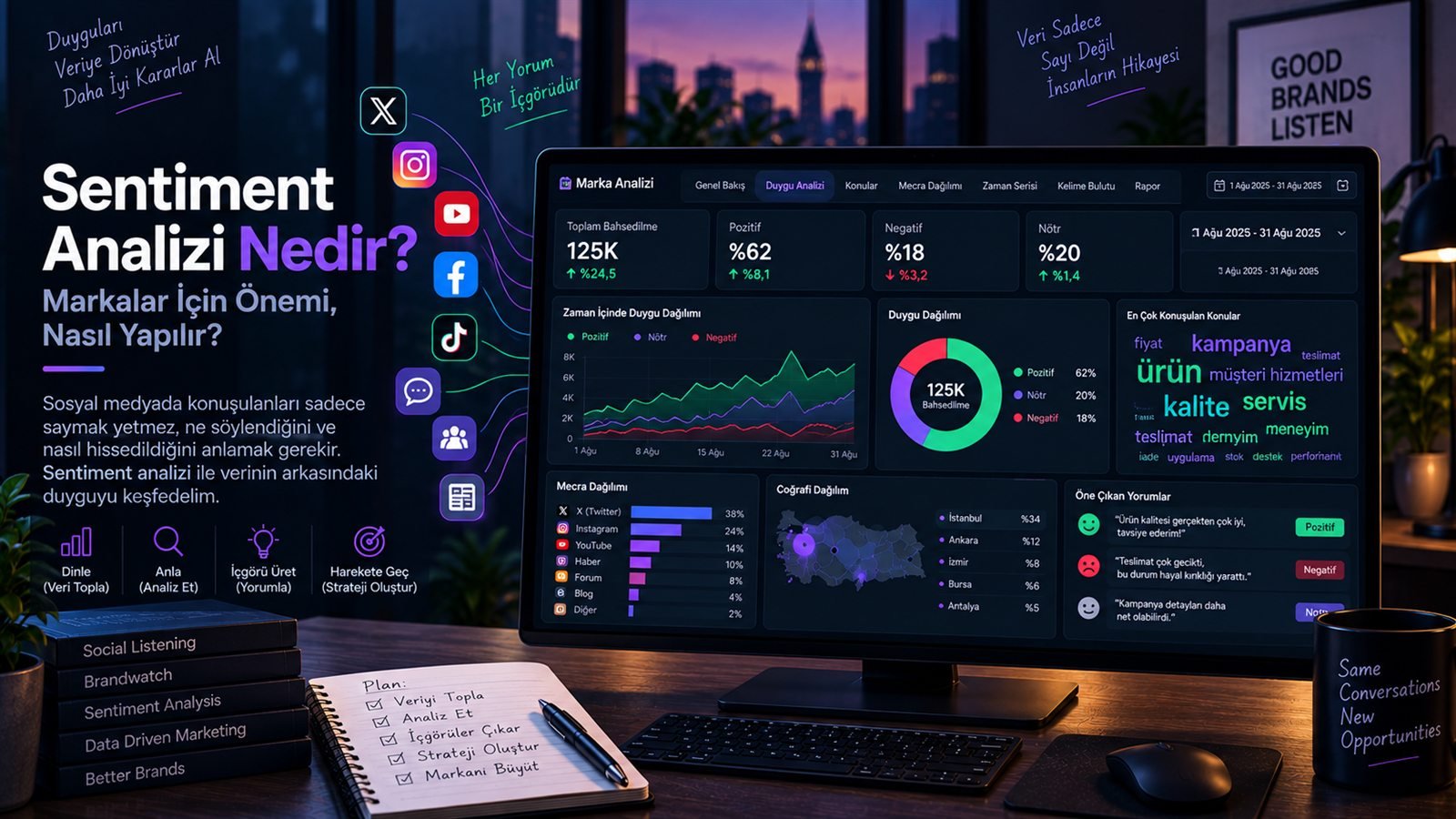
Mention hacmini sentiment analiziyle birleştirdiğimizde konuşmaların duygusal yönünü görebiliriz. İçerikler temel olarak pozitif, negatif veya nötr şekilde sınıflandırılır.
3. Etkileşim: Konuşma Ne Kadar Yayılıyor?
İki içerik aynı sayıda mention üretmiş olabilir; fakat birinin aldığı etkileşim çok daha yüksek olabilir. Bu nedenle beğeni, yorum, paylaşım ve görüntülenme gibi metrikler konuşmanın yayılımını anlamak için kullanılır.
| İçerik | Mention | Etkileşim | Yorum |
|---|---|---|---|
| A | 180 | 42.000 | Yüksek görünürlük |
| B | 240 | 4.000 | Daha sınırlı yayılım |
Bu yüzden yalnızca “kaç kişi konuştu?” değil, “bu konuşma ne kadar görünür hale geldi?” sorusu da önemli.
4. Konu ve Tema Analizi: İnsanlar Neden Konuşuyor?
İtibar analizinin en değerli katmanlarından biri konu analizi. Sentiment bize duyguyu söylerken, konu analizi bu duygunun kaynağını araştırmamıza yardımcı olur.
Ürün kalitesi
Pozitif konuşmaların önemli kısmı ürün performansı ve kalite etrafında toplanabilir.
Müşteri hizmetleri
Negatif konuşmaların bir bölümü destek deneyimi, yanıt süresi veya çözüm kalitesiyle ilişkili olabilir.
Fiyat
Fiyat değişimleri ve kampanya koşulları konuşmanın hacmini doğrudan etkileyebilir.
Teslimat
Teslimat gecikmeleri veya stok bulunurluğu müşteri deneyiminde öne çıkabilir.
5. Kanal Dağılımı: İtibar Nerede Oluşuyor?
Marka hakkında konuşulan içerikler farklı kanallarda farklı davranışlar gösterir. X hızlı gündem üretirken, forumlar daha uzun deneyim anlatıları sunabilir; YouTube yorumları veya haber siteleri ise başka bir bağlam sağlar.
| Kanal | Örnek odak | Analizde kullanılabilecek boyut |
|---|---|---|
| X | Gündem ve hızlı tepkiler | Trend / hız |
| Paylaşım ve yorumlar | Etkileşim | |
| YouTube | Video ve yorum deneyimi | Derin geri bildirim |
| Forumlar | Kullanıcı deneyimleri | Bağlam |
| Haber siteleri | Kurumsal ve sektör gündemi | Gündem |
6. Trend Analizi: İtibar Zaman İçinde Nasıl Değişiyor?
Tek bir günün verisine bakmak yerine trendleri izlemek daha anlamlı sonuçlar verir. Özellikle kampanya, ürün lansmanı, önemli bir açıklama veya müşteri deneyimini etkileyen bir olay sonrasında mention ve sentiment hareketleri incelenmeli.
- Normal
Seviye - Olay /
Gündem - Mention
Artışı - Sentiment
Değişimi - Müdahale
- Toparlanma
7. Mention + Sentiment + Konu Birlikte Nasıl Okunur?
Asıl analitik değer, metrikleri tek tek değil birlikte değerlendirdiğimizde ortaya çıkıyor. Örneğin mention hacmi %60 artarken negatif içeriklerin %45'i teslimat konusuna yoğunlaşıyorsa, sadece “itibar düştü” demek yerine çok daha spesifik bir içgörü elde ederiz.
- Mention
+%60 - Negatif
+%18 - Teslimat
%45 - X
%61 - Sorun
Tespiti - Aksiyon
“İyi itibar analizi metrikleri sıralamaz; metrikler arasındaki ilişkiyi anlatır.”
8. Marka İletişiminde Bu Veriler Nasıl Kullanılır?
Analiz sonucunda elde edilen bulgular, iletişim stratejisinin farklı aşamalarına taşınabilir. Amaç yalnızca rapor hazırlamak değil, rapordaki içgörüleri karar süreçlerinde kullanılabilir hale getirmek.
Mesaj stratejisi
İnsanların en çok konuştuğu konu ve beklentilere göre iletişim başlıklarını belirlemek.
Kriz yönetimi
Hacim ve sentiment'taki olağan dışı hareketleri erken fark etmek.
Müşteri deneyimi
Tekrarlayan şikâyet başlıklarını ilgili ekiplerle paylaşmak.
Kampanya analizi
Kampanya döneminde konuşma hacmi, duygu ve etkileşim değişimini görmek.
Rakip analizi
Marka konuşmalarını kategori ve rakip bağlamında değerlendirmek.
Yönetim raporlaması
Ham mention verisini karar destekleyen özetlere dönüştürmek.
9. Sosyal Medya Verisini Raporlarken Nelere Dikkat Etmeli?
Veriyi temizle
Spam, duplicate, alakasız içerik ve yanlış eşleşmeleri mümkün olduğunca ayır.
Bağlamı koru
Bir mention'ın tek başına değil, konuşmanın bütünü içindeki anlamına bak.
Trendleri karşılaştır
Mevcut dönemi geçmiş dönemlerle ve önemli olaylarla birlikte değerlendir.
İçgörü üret
“Ne oldu?” sorusundan “Neden oldu?” ve “Ne yapılabilir?” sorularına geç.
10. Örnek Marka İtibar Dashboard'u
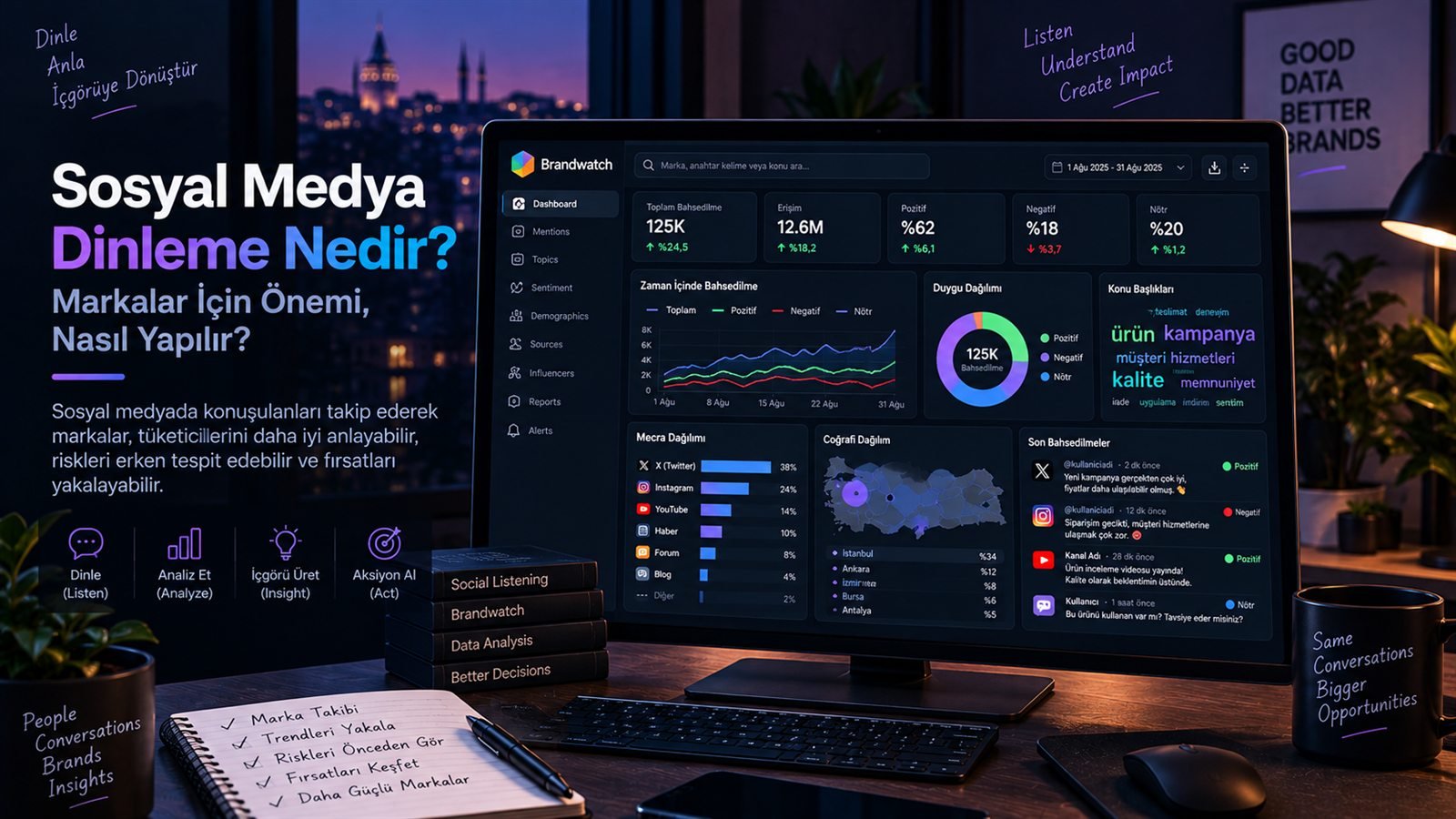
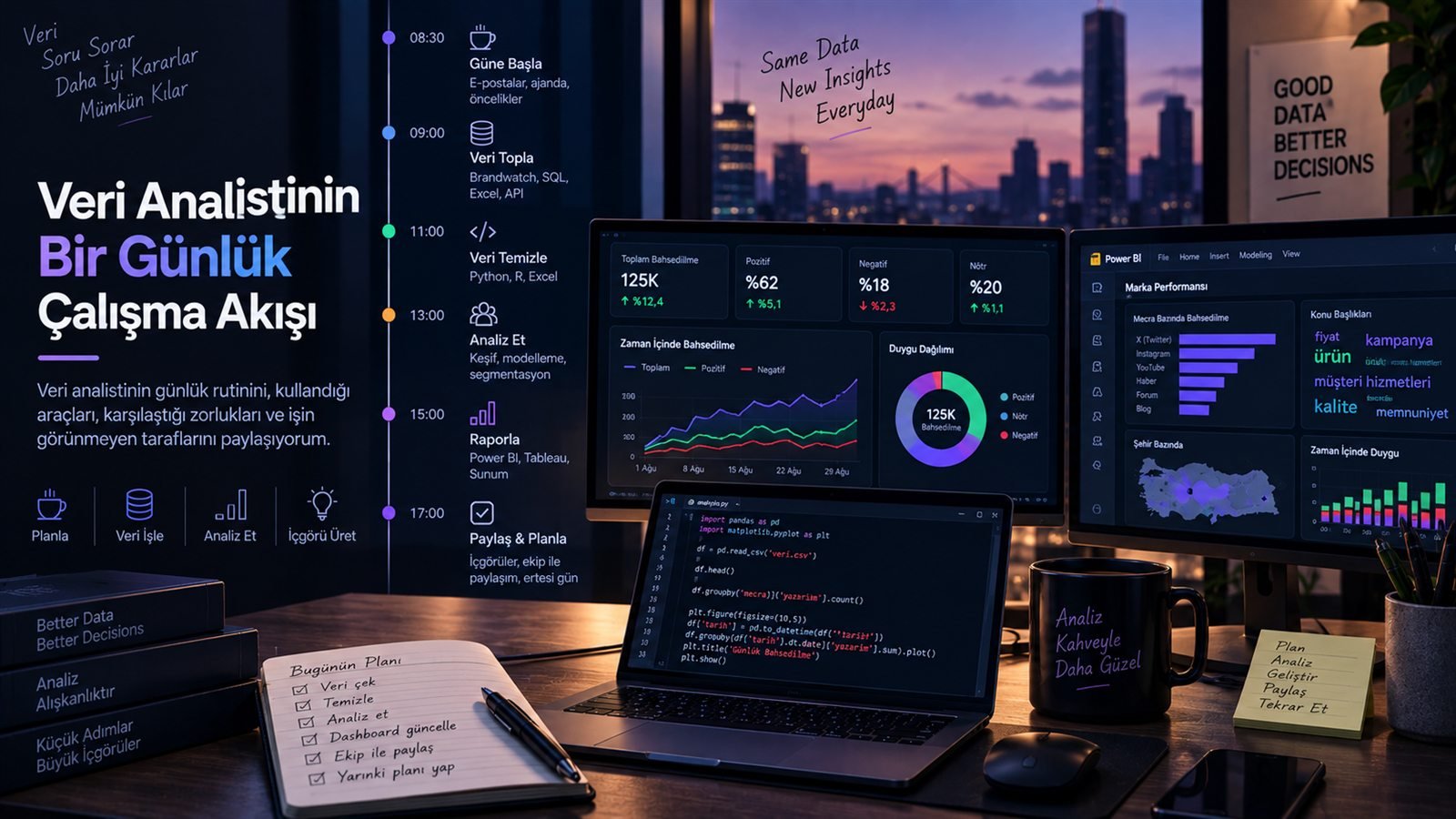
Basit bir itibar dashboard'unda üst bölümde ana KPI'lar, ortada sentiment ve trendler, alt bölümde ise konu ve kanal kırılımları gösterilebilir.
28,4K mention
Toplam konuşma hacmi.
%52 pozitif
Genel sentiment dağılımı.
1,24M etkileşim
Toplam etkileşim hacmi.
5 ana tema
Öne çıkan konuşma başlıkları.
Sonuç
Marka itibar analizi, sosyal medyada kaç kişinin markadan bahsettiğini ölçmekten çok daha kapsamlı bir süreç. Mention sayısı konuşma hacmini, sentiment analizi duygusal yönü, etkileşim yayılımı, konu analizi nedenleri, kanal dağılımı ise konuşmanın nerede oluştuğunu anlamaya yardımcı oluyor.
Bu metrikleri zaman içinde birlikte izlediğimizde markanın dijital itibarındaki değişimleri daha anlamlı biçimde yorumlayabilir; veriyi marka iletişimi, müşteri deneyimi, kriz yönetimi ve yönetim raporlaması gibi alanlarda kullanılabilecek içgörülere dönüştürebiliriz.
“Marka itibar analizinin son noktası rapor değildir; rapordan çıkan içgörünün doğru karara dönüşmesidir.”
Brand reputation is not limited to whether people think positively or negatively about a brand. The conversations that appear on social media are a combination of many factors: customer experience, product perception, price, service quality, campaigns and the wider news agenda.
That is why looking at a single metric is not enough in reputation analysis. Mention volume shows how much is being said, sentiment analysis shows its emotional direction, engagement shows how far it spreads, and topic analysis shows why people are talking. Combining these with the channel and time dimensions gives a far more complete view of a brand's digital reputation.
“Measuring reputation is not only knowing how many people talked; it is understanding what was said, why it was said and how that conversation spread.”
What Is Brand Reputation Analysis?
Brand reputation analysis is the process of systematically collecting, classifying and interpreting the conversations that form about a brand on social media, news sites, forums, blogs and other digital channels.
- Collect
Data - Mention
Analysis - Sentiment
- Topic
- Channel
- Insight
1. Mention Volume: How Much Is Being Said?
One of the first steps is measuring the volume of conversation. How many mentions appeared in a given period, how that changed over time and which channels they concentrated in gives the first picture.
A high mention count is not a positive or negative signal on its own, though. A large campaign can raise the volume, and so can a serious crisis.
2. Sentiment Analysis: Which Way Is the Conversation Going?
Combining mention volume with sentiment analysis shows the emotional direction of the conversations. Content is broadly classified as positive, negative or neutral.
3. Engagement: How Far Does the Conversation Spread?
Two pieces of content may produce the same number of mentions while one of them gets far more engagement. Likes, comments, shares and views are therefore used to understand how far a conversation travels.
| Content | Mentions | Engagement | Comment |
|---|---|---|---|
| A | 180 | 42,000 | High visibility |
| B | 240 | 4,000 | More limited reach |
So the question is not only “how many people talked?” but also “how visible did that conversation become?”.
4. Topic and Theme Analysis: Why Are People Talking?
Topic analysis is one of the most valuable layers of reputation analysis. Sentiment tells us the emotion; topic analysis helps us investigate where that emotion comes from.
Product quality
A large share of positive conversation can gather around product performance and quality.
Customer service
Part of the negative conversation can relate to support experience, response time or resolution quality.
Price
Price changes and campaign conditions can directly affect conversation volume.
Delivery
Delivery delays or stock availability can stand out in customer experience.
5. Channel Distribution: Where Does Reputation Form?
Content about a brand behaves differently on different channels. X produces a fast-moving agenda, forums offer longer experience stories, and YouTube comments or news sites provide yet another context.
| Channel | Typical focus | Dimension to use in analysis |
|---|---|---|
| X | Agenda and quick reactions | Trend / speed |
| Posts and comments | Engagement | |
| YouTube | Video and comment experience | Deep feedback |
| Forums | User experiences | Context |
| News sites | Corporate and sector agenda | Agenda |
6. Trend Analysis: How Does Reputation Change Over Time?
Following trends gives more meaningful results than looking at a single day. Mention and sentiment movements should be examined especially after a campaign, a product launch, an important statement or an event affecting customer experience.
- Normal
Level - Event /
Agenda - Mention
Increase - Sentiment
Shift - Response
- Recovery
7. Reading Mentions, Sentiment and Topics Together
The real analytical value appears when the metrics are read together rather than one by one. If mention volume grows 60% while 45% of the negative content concentrates on delivery, we get a far more specific insight than simply saying “reputation dropped”.
- Mentions
+60% - Negative
+18% - Delivery
45% - X
61% - Problem
Identified - Action
“Good reputation analysis does not list metrics; it explains the relationship between them.”
8. How Is This Data Used in Brand Communication?
The findings can feed different stages of the communication strategy. The aim is not only to produce a report but to make the insights inside it usable in decision making.
Message strategy
Set the communication topics according to what people talk about most and what they expect.
Crisis management
Notice unusual movements in volume and sentiment early.
Customer experience
Share recurring complaint topics with the relevant teams.
Campaign analysis
See the change in volume, sentiment and engagement during a campaign.
Competitor analysis
Evaluate brand conversations in the context of the category and competitors.
Management reporting
Turn raw mention data into summaries that support decisions.
9. What to Watch When Reporting Social Media Data
Clean the data
Separate spam, duplicates, irrelevant content and false matches as far as possible.
Keep the context
Look at what a mention means inside the whole conversation, not on its own.
Compare trends
Evaluate the current period together with past periods and notable events.
Produce insight
Move from “what happened?” to “why did it happen?” and “what can be done?”.
10. An Example Brand Reputation Dashboard
A simple reputation dashboard can show the main KPIs at the top, sentiment and trends in the middle, and topic and channel breakdowns at the bottom.
28.4K mentions
Total conversation volume.
52% positive
Overall sentiment distribution.
1.24M engagement
Total engagement volume.
5 main themes
The leading conversation topics.
Conclusion
Brand reputation analysis is a much broader process than counting how many people mentioned a brand on social media. Mention volume shows how much is said, sentiment shows the emotional direction, engagement shows the spread, topic analysis shows the reasons, and channel distribution shows where the conversation forms.
Following these metrics together over time lets us interpret the changes in a brand's digital reputation more meaningfully, and turn the data into insights usable in brand communication, customer experience, crisis management and management reporting.
“The end point of brand reputation analysis is not the report; it is the insight from that report turning into the right decision.”