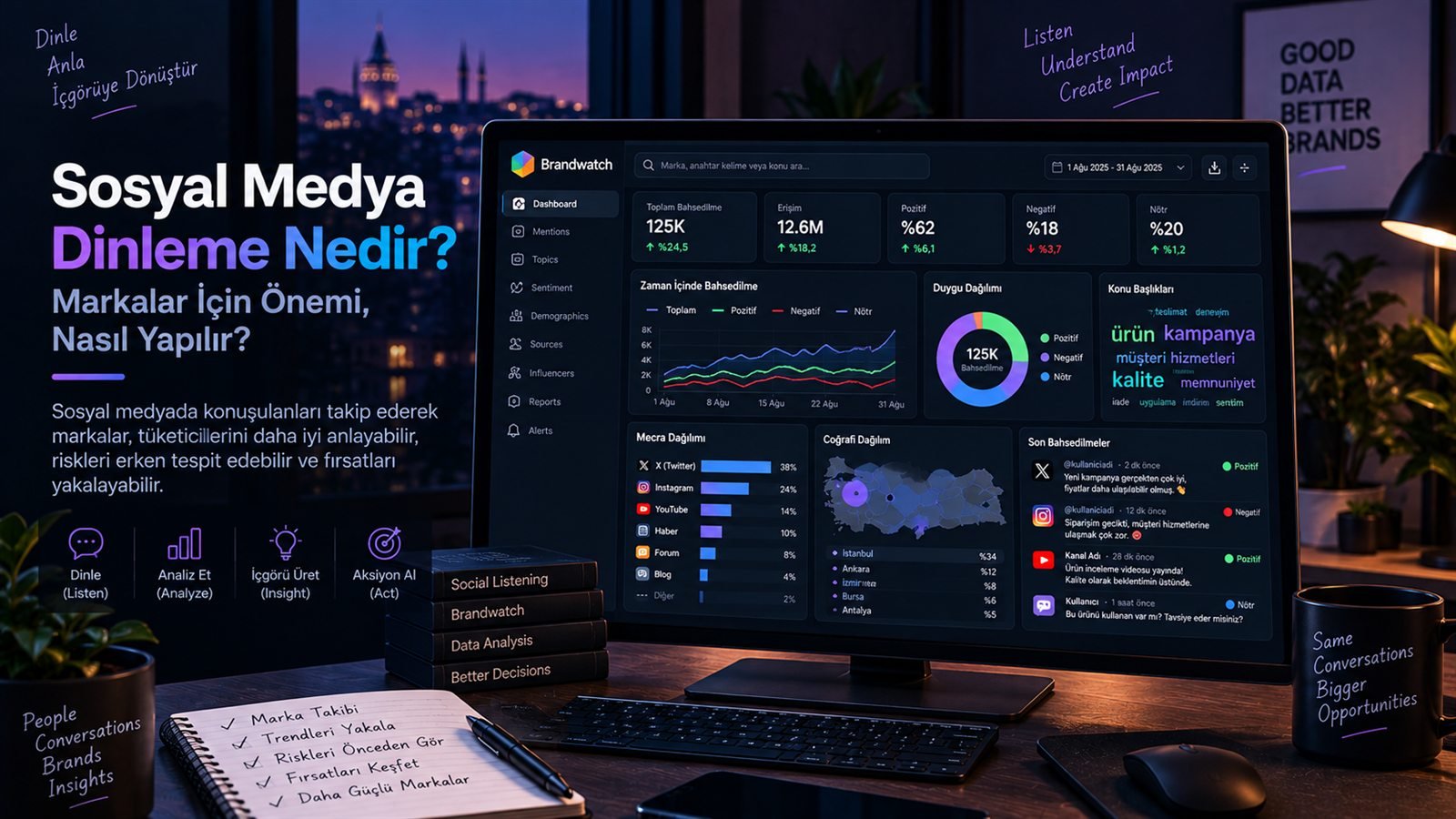
Sentiment Analizi Nedir? Markalar İçin Önemi
Sosyal medyada markalar hakkında konuşulanları anlamak, sadece negatif yorumları görmekten çok daha fazlasıdır.
- Sosyal Medya
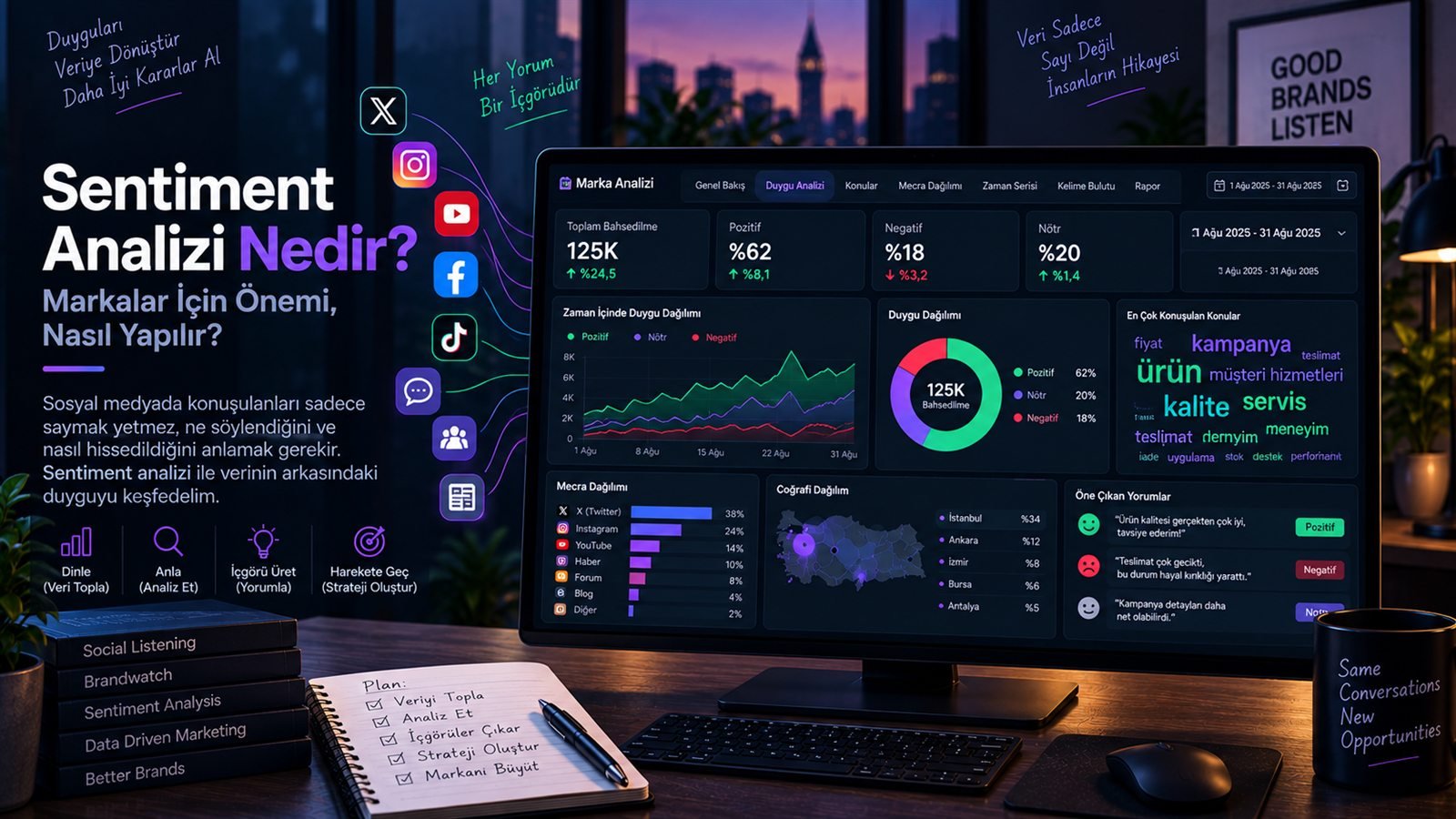
Sosyal medyada her gün binlerce marka mention'ı, yorum, haber ve kullanıcı paylaşımı oluşuyor. Bu içeriklerin tamamını tek tek okumak mümkün değil. Sentiment analizi, bu büyük veri içerisindeki duygusal eğilimi daha sistematik biçimde anlamaya yardımcı oluyor.
Ancak sentiment analizini sadece “kaç tane pozitif, kaç tane negatif yorum var?” şeklinde düşünmek eksik olur. Asıl değer; duygunun neden oluştuğunu, hangi konularla ilişkili olduğunu ve markanın hangi aksiyonları alabileceğini ortaya çıkarmakta.
“Sentiment, konuşmanın duygusunu gösterir; içgörü ise bu duygunun nedenini anlatır.”
Sentiment Analizi Nedir?
Sentiment analizi, metinlerde ifade edilen genel duygusal eğilimi sınıflandırma ve analiz etme sürecidir. En temel yaklaşımda içerikler pozitif, negatif veya nötr olarak sınıflandırılır.
1. Neden Markalar İçin Önemli?
Markalar için sentiment analizi, milyonlarca sosyal medya konuşmasının genel yönünü hızlıca görmek açısından önemli. Fakat daha önemlisi, zaman içinde bu duygunun nasıl değiştiğini izleyebilmek.
Algıyı takip etmek
Marka hakkında oluşan genel duygusal eğilimi dönemsel olarak izlemek.
Sorunları bulmak
Negatif konuşmaların hangi ürün, hizmet veya deneyimlerden kaynaklandığını anlamak.
Erken sinyal
Negatif mention hacminde anormal artışları daha hızlı fark etmek.
İletişimi yönlendirmek
İnsanların ne hissettiğini ve hangi konuların öne çıktığını iletişim planına taşımak.
2. Sentiment Analizi Nasıl Yapılır?
Başarılı bir çalışma yalnızca bir model çalıştırmaktan oluşmaz. Önce doğru veri toplanır, ardından içerikler temizlenir ve sentiment sınıflandırması yapılır. Son aşamada ise sonuçlar konu ve mecra gibi boyutlarla birlikte yorumlanır.
- Veriyi
Topla - Temizle
- Sentiment
Sınıflandır - İçgörü
3. Sadece Pozitif / Negatif Yetmez
Bir dashboard'da negatif yorumların %30 olduğunu görmek başlangıç için yararlı olabilir. Fakat yönetim açısından asıl önemli soru şudur: Bu negatifliğin sebebi ne?
| Sentiment | Konu | Olası aksiyon |
|---|---|---|
| Negatif | Teslimat gecikmesi | Operasyon sürecini incelemek |
| Negatif | Müşteri hizmetleri | Destek sürecini geliştirmek |
| Pozitif | Ürün kalitesi | Başarılı deneyimi korumak |
| Pozitif | Kampanya | Başarılı iletişimi ölçeklemek |
4. Sentiment Verisini Zaman İçinde İzlemek
Tek bir günün sentiment dağılımına bakmak yerine trendi izlemek çok daha anlamlıdır. Bir kampanya sonrası negatifliğin artması veya kriz sonrasında pozitifliğin toparlanması ancak zaman serisi ile görülebilir.
5. Brandwatch Gibi Araçlarda Sentiment
Çoklu kanal ve yüksek hacimli sosyal medya projelerinde sentiment analizi, listening araçlarının önemli özelliklerinden biri olabilir. Brandwatch gibi platformlarda sorgular üzerinden veri toplanabilir, içerikler farklı boyutlarda filtrelenip raporlanabilir.
Mention
Kaç konuşma oluştu?
Sentiment
Genel duygusal dağılım ne?
Theme
İnsanlar ne hakkında konuşuyor?
Mecralar
Konuşma nerede yoğunlaşıyor?
6. Türkçe'de Sentiment Analizi Neden Zor?
Türkçe metinlerde argo, ironi, yazım hataları, kısaltmalar, emoji kullanımı ve bağlam sentiment sınıflandırmasını zorlaştırabilir. Örneğin “Harika olmuş, yine bekletiyorlar.” cümlesinin yalnızca olumlu bir kelime üzerinden sınıflandırılması yanıltıcı olabilir.
İroni
Söylenen ile kastedilenin farklı olduğu içerikler.
Yazım hataları
Sosyal medya dilindeki kısaltmalar ve bozuk yazımlar.
Emoji
🙂, 😡 veya ❤️ gibi sembollerin metne eklediği duygu.
Sektörel anlam
Aynı kelimenin farklı sektörlerde farklı bağlamlara sahip olması.
7. Manuel Kontrol Neden Hâlâ Gerekli?
Otomatik sentiment modelleri yüksek hacimli verilerde büyük zaman kazandırabilir. Ancak özellikle kritik raporlarda örneklem bazlı manuel kontrol yapmak, modelin hangi tür içeriklerde hata yaptığını anlamak açısından önemlidir.
8. Sentiment'tan Gerçek İçgörüye
En güçlü yaklaşım sentiment'i diğer analitik boyutlarla birleştirmek. Sentiment + konu + mecra + zaman + etkileşim birlikte incelendiğinde daha anlamlı bir resim ortaya çıkar.
- Negatiflik
%34 - Teslimat
%46 - X
%61 - Kriz
Sinyali
İyi Bir Sentiment Raporunda Neler Olmalı?
| Alan | Gösterilecek bilgi |
|---|---|
| Genel durum | Pozitif / negatif / nötr dağılımı |
| Trend | Zaman içindeki sentiment değişimi |
| Konu | Negatif ve pozitif konuşmaların ana nedenleri |
| Mecra | Sentiment'in hangi kanallarda yoğunlaştığı |
| Etkileşim | Yüksek etkileşimli içeriklerin sentiment'i |
| İçgörü | Yönetimin aksiyon alabileceği sonuçlar |
Sonuç
Sentiment analizi, markaların dijital ortamda insanlar tarafından nasıl algılandığını anlamak için güçlü bir yöntem. Ancak tek başına pozitif ve negatif yüzdeleri raporlamak yeterli değil.
Asıl değer; sentiment'i konu, mecra, zaman ve etkileşim ile birlikte analiz ederek “İnsanlar ne hissediyor?” sorusundan “Neden böyle hissediyorlar ve marka ne yapmalı?” sorusuna geçebilmekte.
“Sentiment analizi iyi yapıldığında yalnızca duygu ölçmez; müşteri deneyimi, itibar ve iletişim stratejisi için yol gösterir.”
Thousands of brand mentions, comments, news stories and user posts appear on social media every day. Reading all of them one by one is impossible. Sentiment analysis helps us understand the emotional tendency within this big data in a more systematic way.
But thinking of sentiment analysis only as “how many comments are positive and how many are negative?” misses the point. The real value lies in revealing why the sentiment arises, which topics it is linked to and what actions the brand can take.
“Sentiment shows the emotion of a conversation; insight explains the reason behind it.”
What Is Sentiment Analysis?
Sentiment analysis is the process of classifying and analyzing the overall emotional tendency expressed in texts. In its most basic form, content is classified as positive, negative or neutral.
1. Why Does It Matter for Brands?
For brands, sentiment analysis is important for quickly seeing the overall direction of millions of social media conversations. Even more important is being able to track how that sentiment changes over time.
Tracking perception
Monitoring the overall emotional tendency toward the brand over time.
Finding problems
Understanding which products, services or experiences negative conversations come from.
Early signal
Spotting abnormal increases in negative mention volume sooner.
Guiding communication
Bringing what people feel and which topics stand out into the communication plan.
2. How Is Sentiment Analysis Done?
A successful study is not just about running a model. First the right data is collected, then the content is cleaned and classified by sentiment. In the final stage, the results are interpreted together with dimensions such as topic and channel.
- Collect
Data - Clean
- Classify
Sentiment - Insight
3. Positive / Negative Alone Is Not Enough
Seeing on a dashboard that 30% of comments are negative can be a useful start. But from a management perspective the really important question is: What is causing this negativity?
| Sentiment | Topic | Possible action |
|---|---|---|
| Negative | Delivery delay | Review the operations process |
| Negative | Customer service | Improve the support process |
| Positive | Product quality | Protect the successful experience |
| Positive | Campaign | Scale the successful communication |
4. Tracking Sentiment over Time
Following the trend is far more meaningful than looking at a single day’s sentiment breakdown. Negativity rising after a campaign, or positivity recovering after a crisis, can only be seen in a time series.
5. Sentiment in Tools like Brandwatch
In multi-channel, high-volume social media projects, sentiment analysis can be one of the key features of listening tools. On platforms such as Brandwatch, data can be collected through queries, and content can be filtered and reported across different dimensions.
Mentions
How many conversations took place?
Sentiment
What is the overall emotional breakdown?
Themes
What are people talking about?
Channels
Where are conversations concentrated?
6. Why Is Sentiment Analysis Hard in Turkish?
In Turkish texts, slang, irony, spelling mistakes, abbreviations, emoji use and context can make sentiment classification harder. For example, classifying the sentence “Great, they’re keeping us waiting again.” only by its positive word would be misleading.
Irony
Content where what is said differs from what is meant.
Spelling mistakes
Abbreviations and broken spelling in social media language.
Emoji
The emotion that symbols like 🙂, 😡 or ❤️ add to a text.
Industry meaning
The same word can carry different contexts in different industries.
7. Why Is Manual Review Still Needed?
Automated sentiment models can save a lot of time on high-volume data. But especially for critical reports, sample-based manual review is important for understanding which kinds of content the model gets wrong.
8. From Sentiment to Real Insight
The strongest approach is to combine sentiment with other analytical dimensions. When sentiment, topic, channel, time and engagement are examined together, a much more meaningful picture emerges.
- Negativity
34% - Delivery
46% - X
61% - Crisis
Signal
What Should a Good Sentiment Report Include?
| Area | Information to show |
|---|---|
| Overall status | Positive / negative / neutral breakdown |
| Trend | Change in sentiment over time |
| Topic | Main reasons behind negative and positive conversations |
| Channel | Which channels sentiment is concentrated in |
| Engagement | Sentiment of high-engagement content |
| Insight | Findings management can act on |
Conclusion
Sentiment analysis is a powerful way to understand how brands are perceived by people online. But reporting positive and negative percentages on their own is not enough.
The real value lies in analyzing sentiment together with topic, channel, time and engagement, moving from “How do people feel?” to “Why do they feel this way, and what should the brand do?”
“Done well, sentiment analysis does not just measure emotion; it guides customer experience, reputation and communication strategy.”